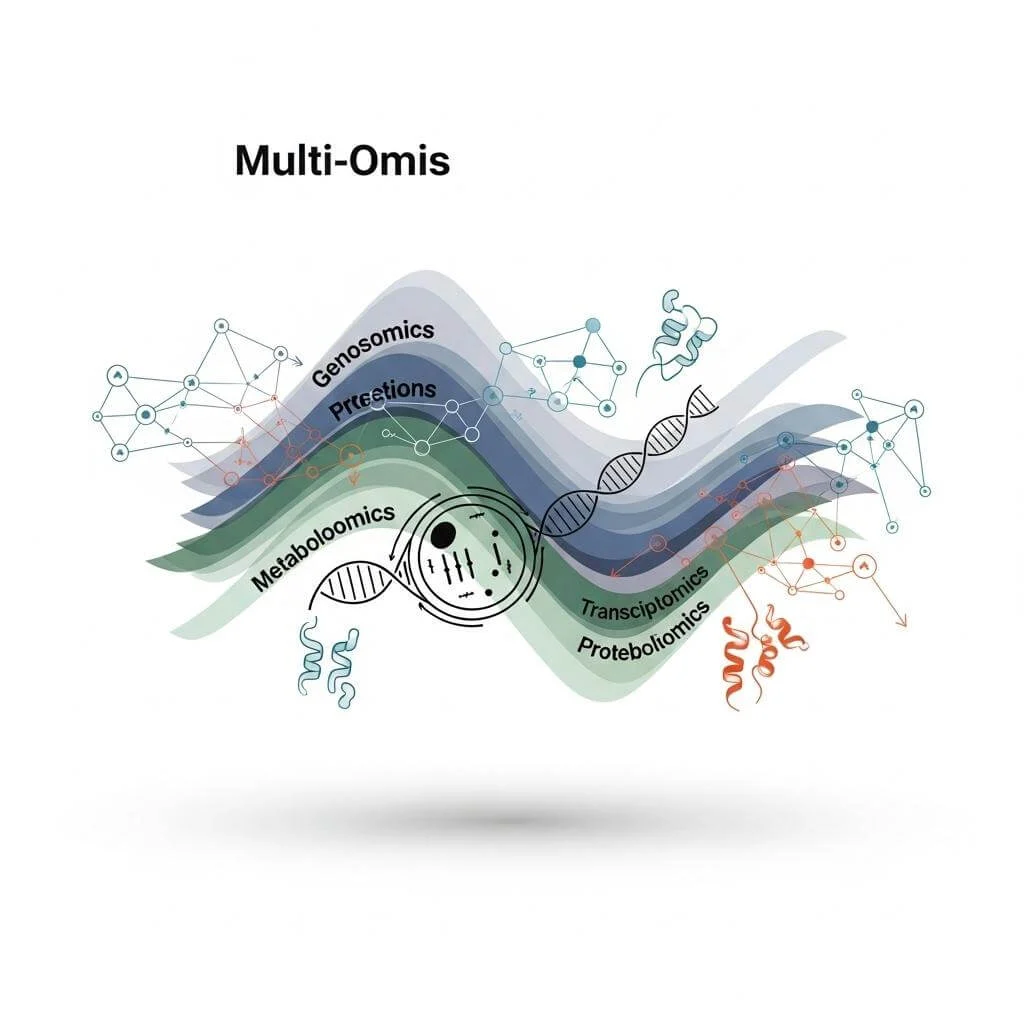
Breast cancer is a biologically heterogeneous disease that requires accurate molecular subtype classification to support prognosis assessment and treatment planning. This research presents moBRCA-net, a deep learning–based breast cancer subtype classification framework designed to integrate multi-omics data while maintaining interpretability.
The proposed method combines gene expression, DNA methylation, and microRNA expression data collected from The Cancer Genome Atlas. A biologically informed feature selection strategy is applied to preserve relationships across omics layers, followed by an omics-level self-attention mechanism that learns the relative importance of each molecular feature. The transformed representations are then used for subtype prediction through fully connected neural network layers.
Experimental results demonstrate that moBRCA-net significantly outperforms traditional machine learning classifiers and state-of-the-art deep learning models. The framework achieves high accuracy, F1-score, and Matthews correlation coefficient, particularly when all three omics datasets are integrated. Additional analyses confirm that attention mechanisms improve model focus on biologically meaningful features and enhance interpretability.
This research is highly relevant for bioinformatics researchers, cancer genomics specialists, and medical AI practitioners. It provides a robust and interpretable framework for multi-omics integration in molecular cancer subtype classification.